从“痴人”自救到世界共鸣:《一个人的西部•成长日记》跨文化解读 | 雪漠对话国际学者(第11期)
From a “Fool’s” Self-Rescue to Global Resonance: A Cross-Cultural Reading of Growth Diary of One man’swest
Dialoguesbetween Xuemo and International Scholars (Session 11)
北京时间2026年5月31日晚,由世界文学联合会、雪漠基金会主办的“雪漠对话国际学者” Zoom对话系列第十一期如期举行。加拿大多伦多大学吴小燕教授以《从自救到自豪的艰辛历程——读〈一个人的西部•成长日记〉有感》为题,与著名作家、文化学者雪漠展开深度对谈。来自中国、意大利、挪威、加拿大、德国、英国、美国等国的近二十位汉学家、翻译家、学者和青年作家云端相聚,围绕这部“成长启示录”的文本价值、跨文化意义与精神内核展开热烈研讨。本对话系列由《雪漠密码》作者陈彦瑾担任学术主持。
On the evening of May 31, 2026 (Beijing Time), the eleventh session of the Dialogues between Xuemoand International Scholars Zoom series, jointly organized by the World Literature Union and the Xuemo Foundation, was successfully held. Professor Xiaoyan Wu of the University of Toronto delivered a keynote presentation entitled “The Difficult Journey from Self-Rescue to Self-Pride: Reflections on Growth Diary of one man’s west,” engaging in an in-depth dialogue with renowned writer and cultural scholar Xuemo.Nearly twenty sinologists, translators, scholars, and young writers from China, Italy, Norway, Canada, Germany, the United Kingdom, the United States, and other countries gathered online to discuss the book’s literary value, cross-cultural significance, and spiritual essence. The dialogue was academically moderated by Chen Yanjin, author of The Xuemo Code.
作为责任编辑,陈彦瑾介绍说,《一个人的西部•成长日记》是雪漠迄今唯一公开出版的日记作品,由人民文学出版社于2022年9月推出,收录了作者1981年至1982年十八九岁时的九十一篇精选日记。该书打破传统日记体例,每篇日记前面增设“导读”、后面补充“解读”,以四十余年的人生积淀回望青春岁月,展示了西部贫瘠土地上一个农民之子超越平庸、实现梦想进而改变命运的心路历程。全书蕴含丰富的人生智慧,是一本富有启迪和力量的成长启示录。
As the book’s editor, Chen introduced Growth Diary of one man’s west as Xuemo’s only publicly published diary work to date. Released by People's Literature Publishing House in September 2022, the book contains ninety-one selected diary entries written between 1981 and 1982, when the author was eighteen and nineteen years old. Breaking with the conventional diary format, each entry is preceded by an “Introduction” and followed by a “Commentary,” allowing the mature author to revisit his youthful experiences through the lens of more than four decades of life experience. The work chronicles the spiritual journey of a farmer’s son from China’s impoverished northwest who transcended mediocrity, pursued his dreams, and ultimately transformed his destiny. Rich in life wisdom, the book serves as an inspiring guide to personal growth.
吴小燕教授以跨文化视角切入,将这部作品置于广阔的坐标系中加以解读:
A Cross-Cultural Interpretation, Professor Wu approached the text from a comparative and cross-cultural perspective, highlighting several key dimensions:
1. 文本形式的创新(“别样日记”)
“前言+日记+后语”的结构不同于传统日记的单纯记录,雪漠在其中加入了大量四十余年后的回顾与解读。这种“时空对话”打破了常规日记体的模式(如鲁迅《狂人日记》),让读者既能看到青春的现场,又能感受到岁月的沉淀。吴小燕建议将书名理解为“痴人日记”,认为青年雪漠对读书、写作、学生、爱情的“痴”,正是他对抗平庸、实现蜕变的原动力。
Formal Innovation: An “Unconventional Diary”
The structure of “Preface + Diary + Epilogue” differs markedly from the traditional diary as a simple record of daily events. Xuemo incorporates extensive reflections written more than forty years later, creating a dialogue across time. This temporal layering breaks away from conventional diary models, such as Lu Xun’s Diary of a Madman, enabling readers to witness both the immediacy of youth and the wisdom gained through experience.
Wu suggested that the book might also be understood as a “Diary of a Fool,” arguing that the young Xuemo’s obsessive devotion to reading, writing, education, and love became the driving force that enabled him to resist mediocrity and achieve personal transformation.
2. 精神内核的提炼(“百炼成钢”)
吴小燕总结出雪漠成功的秘诀在于“自省、自律、自强”的“三自”精神。在甘肃凉州贫瘠的环境下,当周围人都陷入贫穷的麻木时,凭着“不想消失”的追问,雪漠通过写日记练笔、闻鸡起舞读书,一步步挣脱平庸枷锁,最终成长为作品被译为二十余种语言、近六十个外文版本,并斩获美国独立出版奖、纽约大图书奖金奖的国际知名作家。这种“降伏其心”的修行,强调在苦难中向内修心,而非向外索取或征服。
The Spiritual Core: “Tempering Steel Through Trials”
Professor Wu summarized Xuemo’s path to success through what she called the “Three Selfs”: self-reflection, self-discipline, and self-improvement.
Growing up in the harsh environment of Liangzhou in Gansu Province, where many people had become numb to poverty and hardship, Xuemo was driven by a persistent question: “Must I simply disappear without leaving anything behind?” Through diary writing, disciplined study, and relentless self-cultivation, he gradually broke free from the constraints of his circumstances. He eventually became an internationally recognized author whose works have been translated into more than twenty languages, published in nearly sixty foreign editions, and honored with awards such as the Independent Press Award and the New York Big Book Award.
Wu emphasized that this process reflects a distinctly Eastern mode of self-cultivation—one that focuses on conquering the self rather than conquering the world, and on inward transformation rather than outward acquisition.
3. 中西文化的对比(“西部精神”)
不同于美国“西部精神”所代表的拓荒、征服与个人英雄主义(Cowboy/Gunslinger),雪漠的“一个人的西部”是孤独的修行、忍辱负重与如如不动。吴小燕认为,雪漠是张桂梅、马燕等无数中国西部奋斗者中的一个,彰显了在资源匮乏中寻找生命出口的坚韧力量。
3. Comparing Eastern and Western Frontier Spirits
Professor Wu contrasted Xuemo’s concept of “the West” with the American frontier spirit, often associated with exploration, conquest, cowboys, gunslingers, and heroic individualism.
For Xuemo, however, “the West” represents something very different: solitary cultivation, perseverance in adversity, endurance, and inner stillness. Wu observed that Xuemo embodies the spirit shared by countless strivers from western China, such as Zhang Guimei and Ma Yan, demonstrating how individuals can find a path toward self-realization despite limited resources and difficult circumstances.
4. 对未来的期许(“答疑解惑”)
吴小燕引用卡夫卡和鲁迅坚持写日记的例子,强烈建议雪漠整理并出版1983年之后的日记,认为这是研究其思想成长不可或缺的一手资料。
Looking Ahead: The Value of Future Diaries
Drawing parallels with the diaries of Franz Kafka and Lu Xun, Wu strongly encouraged Xuemo to organize and publish the diaries he wrote after 1983. In her view, these materials constitute indispensable primary sources for understanding the evolution of his thought and creative development.
5. 学术传播的展望(“翻译与研究”)
她建议借鉴《鲁迅日记》和《马燕日记》的成功经验,推动《一个人的西部•成长日记》的多语种翻译,并强调优秀的译者应当也是研究者,通过翻译带动国际汉学界对雪漠作品的深度学术解读。
Translation and Scholarly Reception
Wu further suggested following the successful international models of The Diary of Lu Xun and Ma Yan’s Diary by promoting multilingual translations of Growth Diary of one man’s west. She emphasized that the best literary translators are often scholars as well, capable of using translation as a bridge to deeper academic engagement and critical interpretation.
吴小燕教授认为,雪漠的日记不仅是个体的成长史,更是一部“精神现实主义”的教科书。它向世界展示了一种不同于西方个人主义的、源自中国传统文化的生存智慧与精神力量。
In Professor Wu’s view, Xuemo’s diaries represent not merely an individual’s growth story but a textbook of “spiritual realism,” revealing a form of wisdom and resilience rooted in Chinese cultural traditions and offering an alternative to Western individualistic narratives.
对谈中,雪漠首次系统回应了“穷则思变为何发生”的核心命题:“我从小就知道死亡随时会来,所以总在追问:消失之前能给世界留下什么?”这种对“无常”的清醒认知,催生了他“用未来的自己照亮当下的自己”的生命实践——从十三岁写下第一篇文字,到三十七岁迎来创作爆发,他始终以“不投机取巧、不求外力”的姿态,在“写日记—修心—写作”的循环中,完成了从“陈开红”到“雪漠”的蜕变。他还透露,自己至今保留着记录日常的习惯,而1983年之后的数十本日记也正待整理出版,“这些文字不仅是我的成长史,更是普通人可复制的精神样本”。
Xuemo on the Question of Transformation
During the dialogue, Xuemo offered his most systematic response to a central question raised by the book: Why do some people seek change in the face of poverty while others do not?“I knew from childhood that death could come at any moment,” he explained. “So I kept asking myself: before I disappear, what can I leave behind for the world?”This awareness of impermanence inspired what he described as a lifelong practice of “using the future self to illuminate the present self.” From writing his first piece at the age of thirteen to experiencing a major creative breakthrough at thirty-seven, he remained committed to a path free from shortcuts and external dependence. Through a continuous cycle of diary writing, self-cultivation, and literary creation, he completed the transformation from Chen Kaihong to Xuemo.
He also revealed that he still maintains the habit of daily recording and that dozens of diaries written after 1983 remain to be organized and published.
“These writings are not only my own growth history,” he noted, “but also spiritual examples that ordinary people can learn from and replicate.”
在随后的互动环节,青年学者与作家围绕作品的海外传播展开探讨。上海外国语大学硕士生刘景沅以葛浩文夫妇翻译的《沙漠的女儿》(编译本)为研究对象,揭开了这部作品“译者主动翻译、不取分文,作者全权交由译者编译”的幕后故事。正是这种“以读者为中心”的传播理念,反向推动了国内新版《沙漠的女儿》的出版。德国洪堡大学学者娄立则从跨学科视角,向雪漠请教“如何破除知识分子所知障”,雪漠以“心如明镜,不取于相”的东方智慧回应,将讨论从文学层面引向精神修炼的深层维度。
Questions on International Communication
The subsequent discussion focused on the overseas dissemination of Xuemo’s works.
Liu Jingyuan, a master’s student from Shanghai International Studies University, presented research on Daughter of the Desert, an adapted translation prepared by Howard Goldblatt and Sylvia Li-chun Lin. She shared the little-known story that the translators had voluntarily chosen the project, accepted no compensation, and were given complete editorial freedom by the author. This reader-centered approach to translation later contributed to the publication of a new Chinese edition of the work.
Lou Li of Humboldt University of Berlin approached the discussion from an interdisciplinary perspective, asking Xuemo how intellectuals might overcome the limitations created by their own accumulated knowledge. Xuemo responded with the traditional wisdom that “the mind should be like a bright mirror, unattached to appearances,” guiding the conversation beyond literature into the deeper realm of spiritual cultivation.
据悉,“雪漠对话国际学者”系列活动将持续推进,下一场论坛将继续以文学为桥,串联起更多跨文化、跨领域的思想碰撞。正如雪漠在论坛尾声所说:“每一次相遇都是思想的火花,把这些火花留住,就是对无常最好的抵抗。”
Continuing the Dialogue
The organizers announced that the Dialogues between Xuemo and International Scholars series will continue, using literature as a bridge for cross-cultural and interdisciplinary exchange.
As Xuemo remarked in his closing comments:
“Every encounter creates sparks of thought. To preserve those sparks is our best response to impermanence.”




 手机版
手机版  雪漠推荐
雪漠推荐
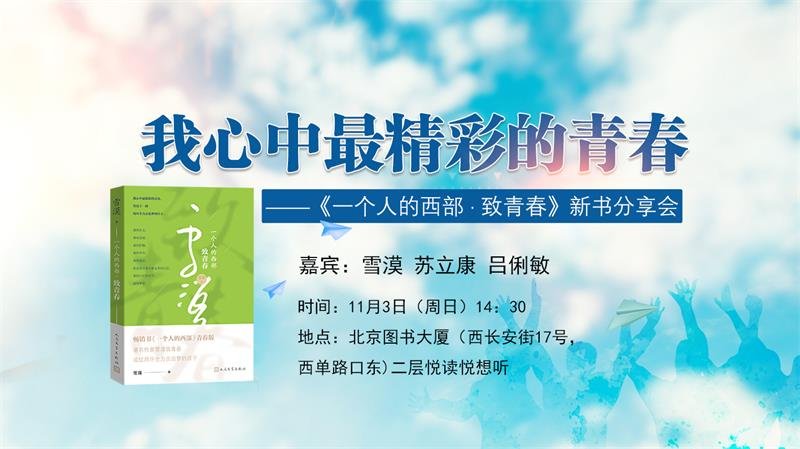 我心中最精彩的青春——《一个人的西部·致