跨越文明的对话:苏菲智慧与东方心性共探人类出路 | 雪漠对话国际学者(第2期)
Dialogue between Xuemo and International
Scholars (Session Two)
A Dialogue Across Civilizations:
Exploring Sufi Wisdom and Eastern Mind-Heart Traditions in Search of a Path for
Humanity
2026年3月1日,当伊朗上空的硝烟牵动着全球的目光,一群来自世界各地的学者在云端相聚,试图从古老的智慧中寻找治愈现代文明撕裂的良方。今日,由世界文学联合会与雪漠基金会联合主办的雪漠对谈国际学者(第二期)圆满落幕。本期对话以“苏菲智慧与文学表达”为主题,特邀中国著名作家雪漠与多位国际汉学家、学者展开深度对谈,探讨文学如何在战火与虚无中,为人类点亮心灯。
On
March 1, 2026, while global attention was drawn to the smoke over Iranian
skies, scholars from around the world gathered in the cloud, seeking remedies
from ancient wisdom traditions to heal the fractures of modern civilization.
The second session of Dialogue between
Xuemo and International Scholars, jointly organized by the World Literature
Union and the Xue Mo Foundation, successfully concluded today. Centered on the
theme “Sufi Wisdom and Literary Expression,” the dialogue invited the renowned
Chinese writer Xuemo and several international sinologists and scholars to engage
in in-depth discussions on how literature can illuminate the human spirit amid
war and existential emptiness.
本次对话由《雪漠密码作者》陈彦瑾主持。她在开场致辞中表示,此次对话旨在打破地缘与文化的隔阂,通过文学这一共通的语言,提升人类文明的认知维度。
The
dialogue was moderated by senior editor and Peking University Chinese
Department alumna Chen Yanjin. In her opening remarks, she emphasized that the
purpose of this exchange was to break down geopolitical and cultural barriers
and to enhance the cognitive dimension of human civilization through literature
as a shared language.
文学:对抗虚无与抚慰疼痛
Literature:
Against Nihilism and as Comfort for Suffering
在对谈中,雪漠回顾了自己的创作初心。出身中国甘肃凉州的他,早年目睹了生命的脆弱与无常,最初以写作对抗虚无,试图通过“立言”实现不朽。然而,随着阅历的增长,他的笔触逐渐从个人的生命困惑转向了对“世界疼痛”的关注。
“今天,我们对伊朗人民遭受的战火摧残感到深深的悲哀。”雪漠在谈及近期国际局势时动情地说,“当医学无法解决生老病死,当政治无法平息战争冲突,文学应当承担起抚慰灵魂的责任。”
During
the dialogue, Xuemo reflected on the origins of his creative path. Born in
Liangzhou, Gansu Province, China, he witnessed early in life the fragility and
impermanence of existence. In his early years, he turned to writing as a way to
resist nihilism and sought literary “immortality” through the act of writing
itself. However, as his experience deepened, his writing gradually shifted from
personal existential concerns to a broader attention to the “suffering of the
world.”
“Today,
we feel deep sorrow for the suffering of the Iranian people amid the
devastation of war,” Xuemo said emotionally when addressing recent
international developments. “When medicine cannot resolve birth, aging,
sickness, and death, and when politics cannot resolve war and conflict,
literature must take on the responsibility of comforting the soul.”
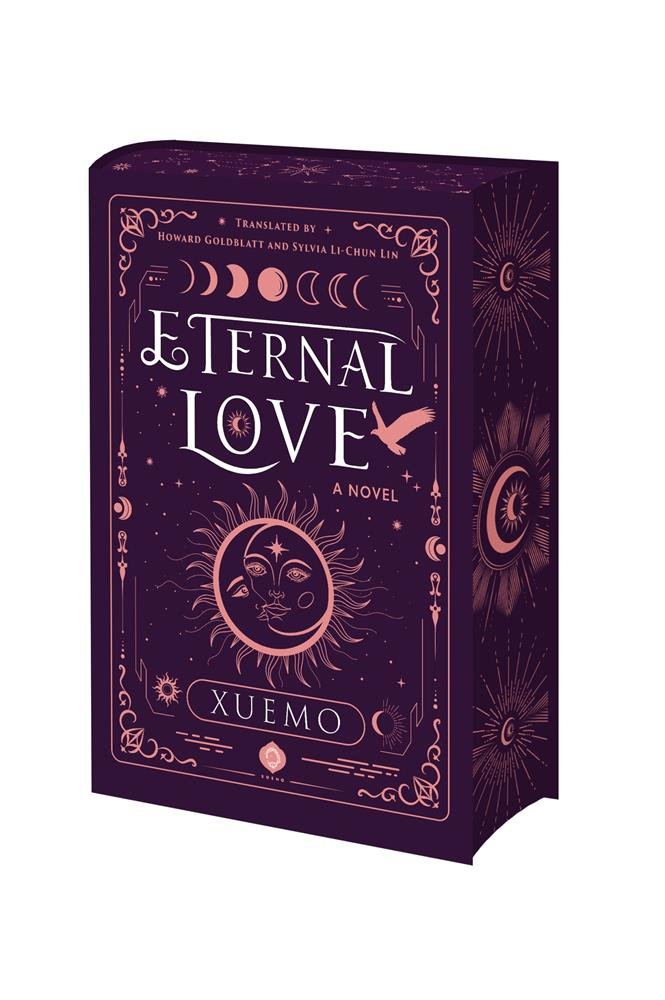
他以代表作《爱不落下》为例,阐述了文学作为一种“精神急救”的力量。该书通过“丫头”这一形象,直面绝症患者的绝望,用文字传递爱与尊严。“人类改变不了疾病,但可以在疾病面前保持尊严;人类改变不了战争,但可以在仇恨中保持悲悯。”雪漠说道。据悉,该书的英文版及相关课程正通过亚马逊及全球直播走向世界,甚至计划于今年3月走进牛津与剑桥,参与英国皇家学会的相关活动。
He
cited his representative work Eternal Love as an example of literature’s power
as “spiritual first aid.” Through the character “Yatou,” the work confronts the
despair of terminally ill patients and conveys dignity and love through
language. “Human beings cannot eliminate disease, but they can maintain dignity
in the face of it; humans cannot eliminate war, but they can preserve
compassion amid hatred,” he said. According to reports, the English edition of
the book and related courses are being introduced globally via Amazon and
online livestreaming, and are even planned to be presented at Oxford and
Cambridge this March in connection with activities of the Royal Society.
殊途同归:苏菲智慧与东方心性
Convergence
of Paths: Sufi Wisdom and Eastern Mind-Heart Tradition
伊朗籍加拿大学者孟娜博士(多伦多都会大学)从苏菲智慧的视角对雪漠作品进行了深度解读。她指出,苏菲智慧强调“存在归一”、消融自我以及以爱识世,这与雪漠作品中流露出的东方心性文明高度契合。
“阅读雪漠老师的作品,我常感受到一种跨文化的精神共鸣。”孟娜表示,“无论是苏菲的‘心’还是东方的‘真心’,都在强调向内求索,通过激活生命内在的芯片,来照亮外部喧嚣的世界。”
雪漠对此深表认同。他认为,人类的所有真理在顶端是相通的,区别仅在于标签与概念。他形象地将世俗生活比作“池塘里的淤泥”,而将超越的智慧比作“莲花”。“重点不在于淤泥或莲花,而在于你心中有没有那盏灯。灯亮了,淤泥也是养分;灯灭了,莲花也会凋零。”
Elham
Mirzania, an Iranian-Canadian scholar from Toronto Metropolitan University,
offered a deep interpretation of Xuemo’s work from the perspective of Sufi
wisdom. She noted that Sufism emphasizes the unity of existence, the
dissolution of the ego, and knowing the world through love — all of which
strongly resonate with the Eastern “mind-heart” civilization reflected in
Xuemo’s writings.
“While
reading Professor Xuemo’s works, I often feel a profound cross-cultural
spiritual resonance,” she said. “Whether it is the Sufi concept of the ‘heart’
or the Eastern idea of the ‘true mind,’ both emphasize inward inquiry and the
activation of the inner spiritual ‘code’ to illuminate the noisy external
world.”
Xuemo
agreed, emphasizing that all truths converge at their highest level, and
differences exist only in labels and conceptual frameworks. He metaphorically
described secular life as “the mud in a pond” and transcendent wisdom as “the
lotus.” “What matters is not the mud or the lotus,” he said, “but whether there
is a lamp within your heart. When the lamp is lit, even mud becomes
nourishment; when the lamp is extinguished, even the lotus withers.”
重构秩序:AI时代的心灵教育
Reconstructing
Order: Spiritual Education in the Age of AI
面对AI技术的飞速发展与全球秩序的动荡,与会学者们表达了对人类未来的深切忧虑。雪漠指出,人类目前的困境在于“外部秩序”的崩坏与“内部秩序”的缺失。他呼吁,在AI接管知识生产的时代,人类急需补上“心灵教育”这一课。
Faced
with the rapid development of AI technology and global turbulence,
participating scholars expressed deep concern about the future of humanity.
Xuemo pointed out that the current human predicament lies in the collapse of
external order and the absence of internal order. He called for the urgent
integration of “spiritual education” in the age when AI is taking over
knowledge production.
“科学只有200年,而心性训练已有几千年。我们不能被科学主义妖魔化了真正的智慧。”雪漠提出了极具前瞻性的构想:应将苏菲式的修炼或东方的心性训练纳入现代教育体系。当无数个体觉醒,不再被欲望裹挟,不再被概念割裂,人类才有希望停止自相残杀。
“未来的战争不应是枪炮之战,而应是诗歌之战。”雪漠幽默而坚定地说,“当每个人都成为了鲁米,世界将充满爱与智慧,而非原子弹。”
“Science
has only developed for 200 years, while mind-heart cultivation has a history of
thousands of years. We must not let scientism demonize true wisdom,” he argued.
Xuemo put forward a forward-looking vision: Sufi-style cultivation and Eastern
mind-heart training should be incorporated into modern education systems. Only
when individuals awaken, no longer driven by desire or fragmented by concepts,
can humanity hope to cease self-destruction.
“Future
wars should not be wars of guns and cannons, but wars of poetry,” he said
humorously yet firmly. “When every person becomes like Rumi, the world will be
filled with love and wisdom rather than atomic bombs.”
结语:点亮黑夜的篝火
Conclusion:
A Bonfire Illuminating the Night
对话尾声,雪漠以一段诗意的话语作结:“我们每个人都是一盏灯,一堆篝火。我们或许驱散不了漫漫长夜,也无法阻止欲望引发的战争,但只要我们在黑夜里点燃这堆火,夜行人看到光亮,就有了希望。”
At
the end of the dialogue, Xuemo concluded with a poetic statement: “Each of us
is a lamp, a bonfire. We may not be able to dispel the long night, nor stop the
wars driven by desire, but as long as we light this fire in the darkness, those
who walk in the night will see hope in its glow.”
正如主持人陈彦瑾所言,这场跨越国界的对话,不仅是学术的交流,更是精神的共振。它将被录入人类文明的数据库,成为无数微光中的一盏,为在动荡世界中寻找安宁的人们,提供一份来自文学与哲学的慰藉.
As
moderator Chen Yanjin noted, this cross-border dialogue was not merely an
academic exchange, but a resonance of spirit. It will be recorded in the
database of human civilization as one of countless points of light — offering,
in a turbulent world, a form of literary and philosophical solace for those
seeking peace.




 手机版
手机版  雪漠推荐
雪漠推荐
 我心中最精彩的青春——《一个人的西部·致