回应时代之问:《娑萨朗》构建“心性文明”新范式 |雪漠对话国际学者(第3期)
Dialoguebetween
Xuemo and International Scholars (Session Three) — Responding to the Questions
of Our Time: Suosalang and the Construction of a New Paradigm of “Mind-Heart
Civilization”
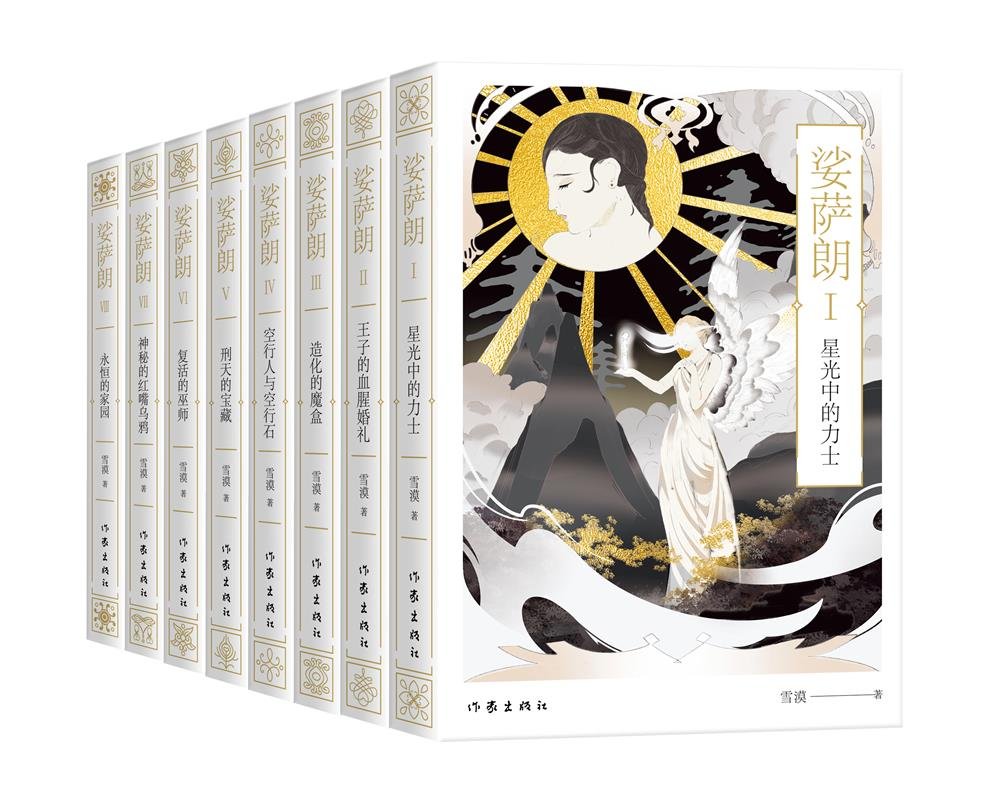
2026年3月15日,由世界文学联合会与雪漠基金会联合主办的第三期“《娑萨朗》国际对谈”在云端圆满落幕。本次对话继续以雪漠先生的八卷本史诗巨著《娑萨朗》为核心,汇聚了来自中国、德国、挪威、加拿大、英国、伊朗等多国的知名学者,围绕作品所蕴含的深邃哲学思想、对“心性文明”的构建以及对人类未来出路的探寻,展开了长达2小时的深度交流与思想碰撞。
On
March 15, 2026, the 3rd session of the “International Dialogue on Suosalang,”
jointly organized by the World Literature Union and the Xue Mo Foundation
founded by Xuemo, successfully concluded in the cloud. The forum continued to
center on the eight-volume epic Suosalang by the Chinese writer Xuemo, bringing
together renowned scholars from China, Germany, Norway, Canada, the United
Kingdom, Iran, and other countries. Over 2 hours, participants engaged in
profound exchanges on the work’s philosophical depth, its construction of
“mind-heart civilization,” and its exploration of possible paths for the future
of humanity.
本次对话由《雪漠密码》作者陈彦瑾主持。在主谈嘉宾雪漠先生与对谈嘉宾、山东大学德语系主任包汉毅教授的引领下,对话从悼念德国哲学家哈贝马斯逝世切入,直面“在AI与科技主导的时代,哲学何为?”这一深刻命题,将《娑萨朗》置于人类文明转型的宏大背景下进行审视。
The
dialogue was moderated by Chen Yanjin, senior editor at the People's Literature
Publishing House and long-time editor of Xuemo’s works. Guided by the keynote
speaker Xuemo and discussant Bao Hanyi, the forum opened with a reflection on
the passing of German philosopher Jürgen Habermas, directly addressing the
profound question: “In an age dominated by AI and technology, what is the role
of philosophy?” Against this backdrop, Suosalang was examined within the grand
transformation of human civilization.
回应时代之问:《娑萨朗》的哲学雄心与“心性文明”构想
Responding
to the Questions of Our Time: The Philosophical Ambition of Suosalang and the
Vision of “Mind-Heart Civilization”
对话伊始,主持人陈彦瑾借哈贝马斯对哲学未来的悲观论断,引出了核心议题:在技术理性膨胀、价值意义被稀释的当代,《娑萨朗》是否承载着建构新哲学体系的雄心?雪漠先生在回应中,分享了他游历世界后的深刻感悟。他指出,当代人类知识爆炸、科技昌明,但许多外求的学问、制度乃至纷争,在个体闭目内观时,常与生命本质无关。人类的痛苦往往源于对“非必需之物”的执着喧嚣。
At
the outset, moderator Chen Yanjin raised the issue of Habermas’s pessimistic
reflections on the future of philosophy, leading to the central question: in a
contemporary world dominated by technological rationality and the dilution of
meaning, does Suosalang carry the ambition of constructing a new philosophical
system?
In
response, Xuemo shared insights from his global experiences. He noted that
although contemporary humanity enjoys an explosion of knowledge and
technological advancement, much of the externally oriented knowledge, systems,
and even conflicts are ultimately unrelated to the essence of life when one
turns inward. Human suffering, he argued, often arises from attachment to
“non-essential things” and the noise of excess desire.
雪漠认为,以“向外征服”为特质的西方文明已陷入困境,世界战火不断。而《娑萨朗》正是他探寻一种“新文明可能性”的尝试。这种文明并非倚重外部的知识与科技,而是指向生命内部“须臾不离的、能够自我圆满的东西”。他将其称为“心性文明”。史诗通过纷繁的叙事,最终引导读者超越外部喧嚣,回归生命本真,寻找一种如呼吸般自然、与个体密切相关的内在光明。《娑萨朗》不仅是一部文学作品,更是以文学形式对“未来哲学”和“未来文明”的演绎与探索。
Xuemo
believes that Western civilization, characterized by outward conquest, has
entered a state of crisis, as wars continue to erupt across the world.
Suosalang, he explained, represents his attempt to explore the possibility of a
“new civilization.” This civilization is not based on external knowledge or
technology, but points instead to something inherently complete within life
itself — something inseparable from existence and capable of self-perfection.
He calls this “mind-heart civilization.”
Through
its complex narrative structure, the epic ultimately guides readers beyond
external noise and back to the essence of life, seeking an inner light as
natural and essential as breathing. Suosalang is not merely a literary work,
but an exploration and articulation of “future philosophy” and “future
civilization” through literary form.
解码“五力士”:心性成就的五个维度
Decoding
the “Five Warriors”: Five Dimensions of Spiritual Fulfillment
针对《娑萨朗》中五位核心人物“五力士”的象征意义,雪漠先生进行了首次公开的深度解读。他指出,“五力士”分别代表了“心性文明”得以圆满、并对世界做出贡献的五个不可或缺的维度:
Addressing
the symbolic meaning of the five central figures known as the “Five Warriors”
in Suosalang, Xuemo offered a rare in-depth interpretation. He explained that
each of the Five Warriors represents an indispensable dimension for the
fulfillment of “mind-heart civilization” and its contribution to the world:
1. 欢喜郎(代表“意成就”):象征心性超越后所抵达的至高精神境界。
2. 密集郎(代表“身成就”):象征在正确心性引领下的利他行为与实践。
3. 幻化郎(代表“语成就”):象征通过话语体系传播正确价值观、改变人类错误共识(如歌颂暴力)的文化影响力。
4. 胜乐郎(代表“功德”):象征心性圆满后对世界的实际贡献,缺乏正面积累的哲学与学说可能沦为罪恶。
5. 威德郎(代表“事业”):象征心性文明所能产生的广泛影响力,一种文明必须能成为生活方式,才能真正影响世界。
1. Huanxilang — “Mental Realization”:
symbolizes the highest spiritual state attained beyond the self.
2. Mijilang
— “Physical Realization”: symbolizes altruistic action guided by correct
inner cultivation.
3. Huanhualang— “Verbal Realization”:
symbolizes cultural influence through language that transmits correct values
and transforms distorted human consensus (such as the glorification of
violence).
4. Shenglelang— “Merit”: symbolizes concrete
contributions to the world after spiritual fulfillment; philosophies lacking
positive accumulation may become harmful.
5. Weidelang— “Activity/Impact”: symbolizes the
broad societal influence of mind-heart civilization; a civilization must become
a way of life in order to truly affect the world.
雪漠强调,只有当这五个方面合力达成终极成就,才能共同创造出新的“娑萨朗”——即理想的精神家园。这为个体修行与文明建构提供了清晰的路径图。
Xuemo
emphasized that only when these five dimensions are fully integrated can a new
“Suosalang” — an ideal spiritual homeland — be created. This provides a clear
roadmap for both individual cultivation and civilizational construction.
史诗体裁、创作奥秘与时代共振
Epic
Form, Creative Mystery, and Resonance with the Times
在对话中,包汉毅教授就史诗体裁的选择、《娑萨朗》的创作状态等提出了系列深刻问题。雪漠先生阐述道,选择史诗体裁,是因为其承载力和表现力能容纳他感知到的“巨大的整体”,并能更直接地传递智慧。他进一步揭示了独特的“无我写作”状态:通过严格的文学训练和心性修炼,打破“小我”执著,融入一个无边无际的“智慧数据库”(或称整体)。写作时,是依据最初的“愿力”(蓝图),从这个数据库中自然流淌出文字。这种写作使文本成为承载作者全息智慧与生命讯息的“数据线”,能与真诚的读者产生“智慧共振”,引导其进入作者的境界,实现生命的升华。
During
the dialogue, Professor Bao Hanyi raised a series of profound questions
regarding the choice of the epic form and the creative state behind Suosalang.
Xuemo explained that the epic form was chosen because of its capacity and
expressive power to contain the “vast totality” he perceives, while also
transmitting wisdom more directly.
He
further described a unique “egoless writing” state: through rigorous literary
training and inner cultivation, the attachment to the “small self” is
dissolved, allowing the writer to enter an infinite “wisdom database” (or
holistic field). Writing then flows naturally from this database based on an
initial “aspiration” or blueprint. In this process, the text becomes a kind of
“data conduit” carrying the author’s holographic wisdom and life information,
capable of resonating with sincere readers and guiding them into a shared state
of realization and spiritual elevation.
针对AI时代文学价值的质疑,雪漠指出,AI可以模仿文字,但真正的伟大文学源于作者“主体性的升华”和人格境界。他充满信心地表示,AI打破了资本与知识的壁垒,恰恰为“心性文明”智慧的普惠传播提供了前所未有的契机。他提倡以“唱诵”而非默读的方式阅读《娑萨朗》,让声波、高频词汇的能量与文本智慧共同作用,达成更深的生命转化。
Addressing
doubts about literature in the AI era, Xuemo emphasized that while AI can
imitate language, great literature arises from the elevation of subjectivity
and the depth of personality. He expressed confidence that AI, by breaking the
monopoly of capital and knowledge, may in fact provide unprecedented
opportunities for the widespread dissemination of “mind-heart civilization.”
He
also proposed reading Suosalang through chanting rather than silent reading,
suggesting that vocal resonance and high-frequency linguistic energy can
interact with textual wisdom to produce deeper transformation of life
experience.
文明互鉴与全球传播的挑战
Civilizational
Dialogue and the Challenge of Global Dissemination
谈及东西方文明与《娑萨朗》的跨文化传播,雪漠认为,当前西方主导的文明迫切需融入东方的“心性文明”与因果智慧。作品传播的最大挑战并非文本本身,而是现代人被资本与碎片化信息摧毁的深度阅读习惯,以及喧嚣世界对回归内心声音的淹没。他主张通过教育体系改革、多媒体改编(如元宇宙、动漫)等多种方式,让这一古老而崭新的智慧融入现代生活。
Discussing
cross-cultural communication between East and West, Xuemo argued that
contemporary Western-dominated civilization urgently needs to integrate Eastern
“mind-heart civilization” and the wisdom of causality. The greatest challenge
in transmitting the work, he noted, lies not in the text itself, but in the
loss of deep reading habits under capitalism and fragmented information, as
well as the suppression of inner stillness by external noise.
He
advocated for multiple dissemination pathways, including educational reform and
multimedia adaptations such as the metaverse and animation, so that this ancient
yet newly emerging wisdom can be integrated into modern life.
对话最后,雪漠对“奶格玛千诺”这一贯穿史诗的核心咒语进行了哲学与当代科学(如量子纠缠)层面的阐释,指出其本质是建立个体与更高智慧维度联结的“心灵密码”,其效用取决于行者的信心与相应。
At
the conclusion of the forum, Xuemo offered a philosophical and contemporary
scientific interpretation (including references to quantum entanglement) of the
mantra “Niguma Qian Nuo,” describing it as a “spiritual code” that connects
individuals to higher dimensions of wisdom. Its effectiveness, he suggested,
depends on the practitioner’s faith and corresponding resonance.
总结
Conclusion
本次对谈不仅深入剖析了《娑萨朗》的文学与哲学内核,更将对话提升至人类共同命运的高度。它清晰地表明,面对技术异化、冲突不断的现代性困境,发源于东方智慧的“心性文明”建构,或将成为引领人类实现内在超越、探索和平出路的一盏关键明灯。学者们的思想交锋,为这部史诗的学术研究与国际解读打开了更为辽阔的视野。
This
dialogue not only offered a deep exploration of the literary and philosophical
core of Suosalang, but also elevated the discussion to the level of humanity’s
shared destiny. It clearly demonstrated that, in the face of technological
alienation and global conflict, the construction of “mind-heart civilization,”
rooted in Eastern wisdom, may serve as a guiding light for humanity’s inner
transcendence and pursuit of peace. The exchange of ideas among scholars opened
a broader horizon for the academic study and international interpretation of
this epic work.




 手机版
手机版  雪漠推荐
雪漠推荐
 我心中最精彩的青春——《一个人的西部·致