
“不被定义的雪漠”:学者杨建新提出雪漠创作重构西部文学精神版图——
| 雪漠对话国际学者(第12期)
“The
Undefinable Xuemo”: Scholar Yang Jianxin on How Xuemo Reimagines the Spiritual
Map of Western Chinese Literature
|
Dialogues Between Xuemo and International Scholars (No. 12)
2026年6月7日晚20:00(北京时间),由世界文学联合会、雪漠基金会主办的“雪漠对话国际学者”线上论坛如期举行。本期论坛聚焦“不被定义的雪漠与重新定义的西部文学”,邀请河西学院外国语学院副院长、河西学院甘肃文艺作品外译与传播研究中心主任杨建新教授担任主谈嘉宾,与中国当代作家、文化学者雪漠展开深度对话。来自中国、意大利、加拿大、英国、墨西哥、美国等国的十余位汉学家、翻译家、学者及青年作家齐聚云端,共同探讨雪漠创作对西部文学边界的突破性意义,为全球文学视野下的西部叙事提供了新的学术坐标。本对话系列由《雪漠密码》作者陈彦瑾担任学术主持。
On the eveningof
June 7, 2026, 20:00 p.m.(Beijing
Time), the
online forum Dialogues Between Xuemo and International Scholars, jointly hosted
by the World Literature Union and the Xuemo Foundation, was held as scheduled.
This session focused on the theme “The Undefinable Xuemo and the Redefinition
of Western Chinese Literature.” The featured guest speaker was Professor Yang
Jianxin, Vice Dean of the School of Foreign Languages at Hexi University and
Director of the Research Center for the Translation and International
Dissemination of Gansu Literary Works. He engaged in an in-depth dialogue with
Xuemo, the renowned contemporary Chinese writer and cultural scholar.
More than a
dozen sinologists, translators, scholars, and emerging writers from China,
Italy, Canada, the United Kingdom, Mexico, the United States, and other
countries gathered online to explore the groundbreaking significance of Xuemo’s
literary achievements in expanding the boundaries of Western Chinese
literature. Their discussions offered new academic coordinates for
understanding western Chinese narratives within a global literary framework.
The dialogue
series was moderated by Chen Yanjin, author of the Code of Xuemo.
陈彦瑾介绍,西部文学在中国文学史上独树一帜,源远流长,而当代作家雪漠是西部文学里极具代表性的探索者。在其担任责任编辑、由著名学者丁帆教授主编的《中国西部新文学史》(人民文学出版社2019年8月出版)中,雪漠在《第六章 西部新文学的蓬勃景观《(1992-2000)》第二节《生灵歌者:新小说群的精神向度》(336页-338页)和《第七章 新世纪西部文学的演进(2000—2017)》第二节《多元绽放:新世纪小说》(419页-424页)中都被重点论述,论述作品包括《大漠祭》《西夏咒》《西夏的苍狼》《无死的金刚心》《野狐岭》等。
Chen Yanjin
noted that Western Chinese literature occupies a distinctive place in the
history of Chinese literature and possesses a rich and enduring tradition.
Among contemporary writers, Xuemo stands out as one of the most representative
and innovative explorers of this literary tradition.
In a New History
of Western Chinese Literature (published by People's Literature Publishing
House in August 2019), for which Chen served as responsible editor and which
was edited by the renowned scholar Professor Ding Fan, Xuemo's works receive
extensive scholarly attention. He is discussed in both Chapter Six, “The
Flourishing Landscape of New Western Literature (1992–2000),” particularly in
Section Two, “The Singer of Living Beings: The Spiritual Dimension of the New
Fiction Writers” (pp. 336–338), and Chapter Seven, “The Evolution of Western
Chinese Literature in the New Century (2000–2017),” especially in Section Two,
“A Blossoming of Diversity: Fiction in the New Century” (pp. 419–424).
The works
examined include Desert Rites, Curse of the Kingdom of Xixia, The Blue Wolf of
Xixia, The Undying Diamond Heart, and Wild Fox Ridge, among others. Through
these writings, Xuemo is recognized as a significant contributor to the ongoing
development and spiritual imagination of Western Chinese literature.
作为国内较早聚焦雪漠作品海外传播的学者,杨建新与雪漠的交集始于2022年的“作品外译与传播”专题访谈,2026年5月专程拜访雪漠书院后,进一步形成了本次研讨的核心命题:“雪漠始终在突破创作边界,却也在无形中重构了人们对西部文学的认知。”
As one of the
earliest Chinese scholars to focus on the international translation and
dissemination of Xuemo’s works, Yang Jianxin’s engagement with Xuemo began with
a 2022 interview on the theme of “translation and global dissemination of
literary works.” Following a special visit to the Xuemo Academy in May 2026,
Yang further developed the central proposition that would shape this forum:
“Xuemo has
consistently pushed beyond the boundaries of literary creation, and in doing
so, has subtly reshaped our understanding of Western Chinese literature.”
This observation
became the guiding theme of the discussion, highlighting not only Xuemo’s
continuous experimentation as a writer but also his role in redefining the
intellectual and cultural horizons of Western Chinese literature.
研讨中,杨建新首先梳理了传统西部文学的固有特征:长期被视为地理与文化双重意义上的“边地书写”,以苍凉自然意象、苦难叙事、民俗奇观、男性英雄叙事为核心标识,代表作家包括路遥、陈忠实、贾平凹、红柯等。而雪漠的创作轨迹恰恰构成了对这种范式的持续突破:从“大漠三部曲”(大漠祭)《猎原》《白虎关》)对凉州乡土的写实定格,到“灵魂三部曲”(《西夏咒》《西夏的苍狼》《无死的金刚心》)融合宗教体验、超验叙事的精神书写,再到史诗新作《娑萨朗》跳出具体地域边界、直抵人类共通的生命困惑,其创作早已无法用“西部作家”“乡土作家”单一标签定义。
During the
discussion, Yang Jianxin first outlined the defining characteristics
traditionally associated with Western Chinese literature. For decades, it has
been regarded as a form of “frontier writing,” situated at both the
geographical and cultural margins of China. Its distinguishing features have
typically included stark natural landscapes, narratives of hardship, vivid
depictions of folk customs, and stories centered on male heroic figures.
Representative writers of this tradition include Lu Yao, Chen Zhongshi, Jia
Pingwa, and Hong Ke.
Xuemo’s literary
trajectory, however, represents a sustained departure from this established
paradigm. Beginning with the Desert Trilogy—Desert Rites, Desert Hunters, and
White Tiger Pass—he offered realistic portrayals of rural life in the Liangzhou
region. He then moved toward a more spiritual mode of writing in the Soul
Trilogy—Curse of the Kingdom ofXixia, The Blue Wolf of Xixia, and The Undying
Diamond Heart—which integrates religious experience with transcendent narrative
forms. Most recently, in his epic masterpiece Suosalang, Xuemo transcends
specific regional and cultural boundaries altogether, confronting universal
questions of human existence and the meaning of life.
As Yang argued,
Xuemo’s body of work can no longer be adequately defined by labels such as
“Western Chinese writer” or “rural writer.” His literary vision has expanded
beyond regional representation to engage with broader spiritual, philosophical,
and existential concerns, thereby challenging and reshaping conventional
understandings of Western Chinese literature itself.
“雪漠的意义,在于把西部从‘地理概念’变成了‘精神场域’。”杨建新指出,雪漠笔下的西部不再是风沙、驼队的背景板,而是生命承受苦难、人性接受考验、精神觉醒发生的空间;他书写苦难却不止步于控诉,始终指向“苦难如何成为生命淬炼的契机”;他打破了西部文学长期的“男性荒原”叙事,让女性命运、底层生存、人与自然的共生关系构成复调共鸣。更重要的是,雪漠作品已被译为英、德、阿拉伯等多语种,进入全球数十个国家图书馆馆藏,让西部文学真正成为向世界传递中国生命伦理与东方智慧的窗口。
“The
significance of Xuemo,” Yang Jianxin observed, “lies in his transformation of
the West from a geographical concept into a spiritual realm.”
According to
Yang, the West in Xuemo’s writings is no longer merely a backdrop of deserts,
sandstorms, and camel caravans. Instead, it becomes a space where life endures
suffering, human nature undergoes trials, and spiritual awakening takes place.
While Xuemo frequently writes about hardship, his work does not stop at
exposing or lamenting suffering; rather, it consistently explores how suffering
can become a catalyst for personal growth and spiritual refinement.
Yang further
noted that Xuemo breaks away from the long-standing “male wilderness” narrative
that has dominated much of Western Chinese literature. In his works, the
destinies of women, the struggles of ordinary people at the grassroots level,
and the symbiotic relationship between humanity and nature come together to
form a rich polyphonic narrative. These multiple voices broaden the thematic
scope of Western Chinese literature and deepen its humanistic dimension.
More
importantly, Xuemo’s works have been translated into numerous languages,
including English, German, and Arabic, and are now held in libraries across
dozens of countries. Through this international circulation, Western Chinese
literature has evolved into a meaningful channel for conveying Chinese
perspectives on life, ethics, and Eastern wisdom to readers around the world.
杨建新认为,将雪漠作品归为“苦难叙事”“魔幻现实主义”是一种误读,他结合文本细节逐一澄清:“‘大漠三部曲’的核心是‘呈现’而非‘卖惨’,读者从中获得的是直面生活的力量;所谓‘魔幻’只是叙事外壳,本质是一以贯之的心灵求索,——从早期《新疆爷》中“活人了事”的通透,到后期作品对“本心”的追寻,始终指向为读者提供对抗无常的精神力量。他认为,雪漠与西部是双向成就的关系:凉州的文化底蕴孕育了贯穿其所有作品的“雪漠心学”,而雪漠的创作也让西部文学摆脱了刻板标签,拓展出“向内求索、凡事问询本心”的全新精神内核。
Yang Jianxin
argued that categorizing Xuemo’s works simply as “suffering narratives” or
“magical realism” constitutes a misunderstanding of their deeper significance.
Drawing on close textual analysis, he sought to clarify these interpretations
one by one.
“The core of the
Desert Trilogy,” Yang explained, “lies in its commitment to presenting life as
it is, rather than exploiting suffering for emotional effect. What readers gain
from these works is not pity, but the strength to confront life directly.”
Likewise, he maintained that what is often labeled as “magical” in Xuemo’s
fiction is merely a narrative surface. At its heart lies a consistent spiritual
quest that runs throughout his entire oeuvre. From the lucid life philosophy
expressed in the early short story Old man Xinjiang—captured in the idea of
“resolving life’s affairs while one is still alive”—to the later works’
sustained search for one’s original mind and authentic self, Xuemo’s writing
continually seeks to provide readers with the inner resources needed to face
uncertainty and impermanence.
Yang further
emphasized that the relationship between Xuemo and Western China is one of
mutual enrichment. The rich cultural heritage of Liangzhou nurtured what he
described as “Xuemo Heart Studies,” a spiritual philosophy that permeates all
of Xuemo’s writings. At the same time, Xuemo’s literary achievements have
enabled Western Chinese literature to move beyond long-standing stereotypes and
regional labels, opening up a new spiritual horizon centered on inward exploration,
self-reflection, and the continual practice of consulting one’s innermost
conscience in the face of life’s challenges.
杨建新还向读者推荐了阶梯式阅读路径:可从《雪漠小说精选》短篇入门,再依次深入“大漠三部曲”、自传体作品《一个人的西部》、“灵魂三部曲”及史诗《娑萨朗》,同步参照文化论著理解其文学背后的精神体系。本次研讨的相关成果还将纳入杨建新即将于2026年9—10月出版的《认知文体学视域下英译雪漠作品中乡土语言的再现与重构》《甘肃当代文学在海外的译介与传播研究》两部专著,为西部文学走出去提供学术参照。
Yang Jianxin
also recommended a progressive reading pathway for those interested in
exploring Xuemo’s literary world. He suggested that new readers begin with
Selected Stories byXuemo to gain an initial understanding of the author’s style
and themes, before moving on to the Desert Trilogy, the autobiographical work
One Man’s West, the Soul Trilogy, and finally the epic Suosalang. Alongside
these literary works, Yang encouraged readers to consult Xuemo’s cultural and
philosophical writings in order to better understand the spiritual framework
that underlies his fiction.
Yang further
noted that the insights generated through this discussion will be incorporated
into two forthcoming scholarly monographs scheduled for publication in
September–October 2026: The Representation and Reconstruction of Vernacular
Language in the English Translations of Xuemo’s Works from the Perspective of
Cognitive Stylistics and The Translation and International Dissemination of
Contemporary Gansu Literature. These studies aim to provide valuable academic
references for the global dissemination of Western Chinese literature and
contribute to broader discussions on the international circulation of regional
Chinese literary traditions.
雪漠在回应中首次系统谈及自己的创作逻辑:他的写作始终被“时代痛点”推动,“大漠三部曲”“灵魂三部曲”是“必须写的”,而近年来的《妈妈的星星》《爱不落下》《考拉要开心》等作品,则是面对自闭症群体、重症患者、青少年心理困境等社会议题的“不期而遇”。他将自己的创作状态形容为“被灵感裹挟”:“无数素材像客人一样敲门,写不完就怕它们‘死在肚子里’。”这种写作的背后,是西部原生萨满文化与儒释道智慧的融合——“万物有灵”的萨满思维让他笔下的土地、动物都拥有呼吸与生命,而量子力学对“观测影响量子状态”的发现,恰恰印证了这种古老智慧的科学性。
In his response,
Xuemo offered a systematic reflection on his own logic of literary creation for
the first time. He explained that his writing has always been driven by the
“pain points of the era.” Works such as the Desert Trilogy and the Soul Trilogy
were, in his words, “necessary to write.” In recent years, however, books such
as Mama’s Stars, Eternal Love and Koala, Be Happy have emerged as “unexpected
encounters” with pressing social issues, including children with autism,
patients with severe illnesses, and the psychological struggles of adolescents.
Xuemo described
his creative state as one of being “carried along by inspiration,” noting:
“Countless materials knock on my door like guests; if I cannot write them down
in time, I fear they will ‘die inside me.’” Underlying this mode of writing is,
as he suggested, a fusion of Western Chinese indigenous shamanic culture and
the wisdom traditions of Confucianism, Buddhism, and Daoism. The shamanic
worldview of “all things possessing spirit” endows the landscapes and animals
in his works with breath and life, while findings in quantum
physics—particularly the idea that observation affects quantum states—are seen
by him as a scientific echo of this ancient wisdom.
雪漠还透露,自己正尝试提炼一种“雪漠心学”的文明学说:“现有人类文明多是物质文明的积累,而中华文明中传承五千年的‘心性文明’才是真正的长寿基因。”他希望通过文学与文化写作,将这种东方智慧转化为可被世界读懂的“精神芯片”,为人工智能时代的人类提供心灵救赎的可能。
Xuemo also
revealed that he is currently attempting to articulate a civilizational theory
he calls “Xuemo Heart Studies.” He argued that much of existing human
civilization is primarily the accumulation of material development, whereas the
“wisdom of mind and nature” preserved within five thousand years of Chinese
civilization represents, in his view, a truly enduring “gene of longevity.”
He expressed the
hope that, through both literary and cultural writing, this Eastern wisdom
could be transformed into a form of “spiritual code” that the world can
understand, thereby offering new possibilities for spiritual redemption in the
age of artificial intelligence and providing human beings with renewed
resources for inner meaning and existential grounding.
论坛中还有两位学者与雪漠进行了交流:
Two additional
scholars also engaged in dialogue with Xuemo during the forum.
加拿大多伦多都会大学司徒祥文博士表示,他非常欣赏雪漠所说的"不被定义的作家"这一自我定位。他指出雪漠早期(《大漠祭》)、中期(《无死的金刚心》)与近期作品呈现出的立场与视角截然不同,读者可从不同阶段读出多元的生命质感,这种拒绝自我复制、随时代不断生长的写作本身极为珍贵。
Dr. Stowe of
Toronto Metropolitan University, Canada, expressed his appreciation for Xuemo’s
self-identification as an “undefinable writer.” He observed that Xuemo’s early
works (such as Desert Rites), middle-period writings (such as The Undying
Diamond Heart), and more recent works differ markedly in stance and narrative
perspective. Readers, he noted, can discern a diverse range of life textures
across these different creative phases. This refusal to replicate himself, and
his continuous literary growth in response to changing times, constitutes, in
Stowe’s view, a particularly valuable quality in contemporary literature.
中国澳门科技大学助理教授夏欢博士正在撰写《西夏咒》书评,她注意到雪漠小说中同时存在密宗(如大善大恶同源性、破除我执与法执)与禅宗(如明心见性、迫使读者剥离社会身份寻找"我是谁")的思想痕迹,提问雪漠作品是否体现了一种“禅密不二”的境界,这种交融是思想的自然流露,还是刻意建构。雪漠回复是思想的自然流露而非刻意塑造。禅密二者终极目的都是明心见性、解决烦恼,证入超越二元对立的"真心"状态,但禅宗重在"破"——破除执著与分别,烦恼歇即万事毕,不特别强调构建;密宗在"破"后重在"立"——明心后要借观修重构内心世界(如本尊、坛城),乃至发起"即身成佛"的愿力与利他空间。
Dr. Xia Huan,
Assistant Professor at Macau University of Science and Technology, who is
currently writing a review of Curses of the Kingdom of Xixia, noted that
Xuemo’s novels contain discernible traces of both Vajrayana Buddhism—such as
the shared origin of great good and great evil, and the deconstruction of
attachment to the self and to dharmas—and Zen Buddhism, particularly in its
emphasis on awakening one’s original nature and compelling readers to strip
away social identities in order to confront the fundamental question of “Who am
I?”
She then asked
whether Xuemo’s works embody a state of “non-duality between Zen and
Vajrayana,” and whether such integration is a natural expression of his thought
or a deliberately constructed framework.
Xuemo responded
that this integration arises from natural intellectual and experiential
development rather than deliberate design. He explained that both Zen and
Vajrayana ultimately aim at the realization of the true mind—awakening one’s
original nature and resolving suffering by transcending dualistic oppositions
and entering the state of “true mind.”
However, he
noted that Zen emphasizes “deconstruction”—the dissolution of attachment,
conceptual distinctions, and mental fabrications. Once delusion and grasping
cease, all is accomplished, and there is little emphasis on further
construction. Vajrayana, by contrast, after this stage of “deconstruction,”
emphasizes “reconstruction”: once the mind is awakened, it employs
contemplative visualization practices to rebuild an inner spiritual cosmos,
such as mandalas and deity yoga, and further cultivates the aspiration for
“attaining Buddhahood in this very body” along with expansive altruistic
engagement.
雪漠认为自己的创作更像"酿酒"——以中华儒释道为底,融合西部萨满文化(万物有灵)、西方哲学等多源养分,酿出独属于"雪漠心学"的精神质地,不拘泥于宗派名相,是生命体验的整体呈现。
Xuemo described
his creative practice as being akin to “brewing wine.” Drawing upon Confucian,
Buddhist, and Daoist traditions as a foundational base, he integrates diverse
sources of intellectual and cultural nourishment, including Western Chinese
shamanic culture (with its belief in the animism of all things) and Western
philosophy, to ferment a unique spiritual substance that he calls “Xuemo Heart
Studies.” This process, he emphasized, does not adhere rigidly to sectarian
classifications or doctrinal labels, but rather seeks to present an integrated
expression of lived human experience.
正如雪漠在总结中所言:“文学交流就像酿酒,无数文明的‘粮食’最终会酿成滋养人类的新酒。”这场跨越时区的对话,或许正是西部文学从“中国叙事”走向“世界叙事”的一个生动注脚。
As Xuemo
summarized, “Literary exchange is like brewing wine: the ‘grains’ of countless
civilizations ultimately ferment into a new wine that nourishes humanity.” This
cross-time-zone dialogue thus serves as a vivid illustration of Western Chinese
literature’s transition from a “Chinese narrative” to a “world narrative.”




 手机版
手机版  雪漠推荐
雪漠推荐
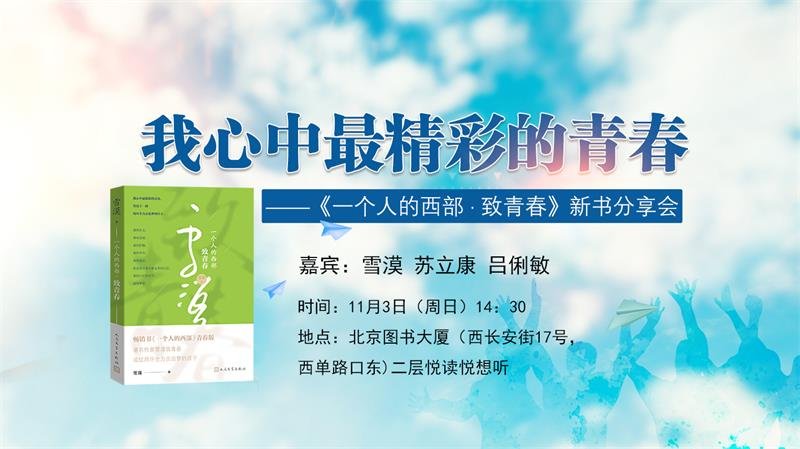 我心中最精彩的青春——《一个人的西部·致