中英师生云端对话,共探文学中的“忠言、慈爱与感恩”
——《娑萨朗》跨语际文本研习zoom活动成功举办
Chinese
and British Teachers and Students Hold a zoom Dialogue to Explore “Loyal
Counsel, Compassion, and Gratitude” in Literature
— A
Cross-Linguistic Textual Study of Suosalang Successfully
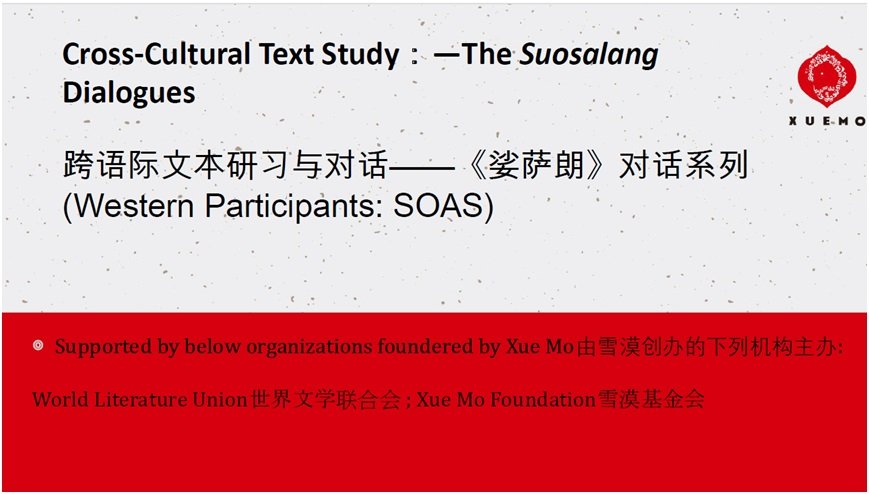
2026年4月4日,一场别开生面的线上国际交流活动成功举行。本次活动由雪漠创立的世界文学联合会与跨语际文本研习与对话:《娑萨朗》对话系列”为主题,连接了来自中国与伦敦大学亚非学院(SOAS)的学者与学生,围绕著名作家雪漠的长篇史诗《娑萨朗》选段,展开了长达100分钟的深度对话与思想碰撞。
On April 4,
2026, a distinctive international online exchange event was successfully held.
Jointly organized by the World Literature Association and the Xue Mo
Foundation, foundered by Xue Mo. the event, titled “Cross-Linguistic Textual
Study and Dialogue: The Suosalang Dialogue Series,” connected scholars and
students from China and the School of Oriental and African Studies (SOAS),
University of London. Centered on selected passages from the renowned writer
Xue Mo’s epic novel Suosalang the participants engaged in a 100-minute in-depth
dialogue and exchange of ideas.
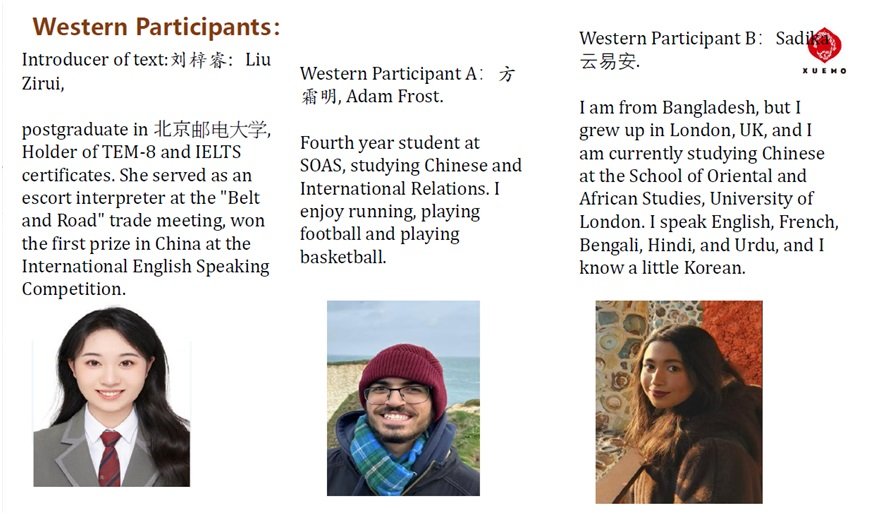
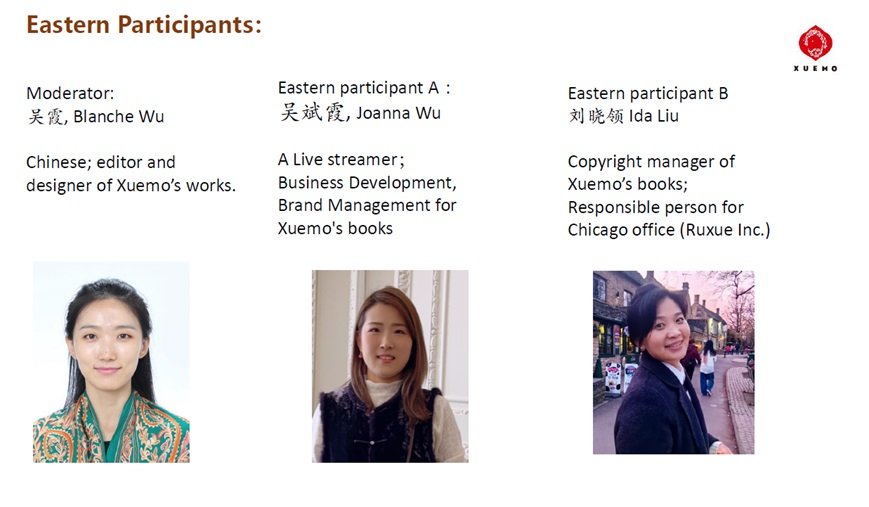
本次对话旨在通过具体的文学文本,探索“忠言、慈爱、感恩”等核心人文价值在不同文化语境下的表达与理解,以提升参与者的跨文化沟通与文本分析能力。活动由资深编辑吴霞(Blanche
Wu)主持,并邀请了来自多伦多大学的吴小燕教授、多伦多都会大学的孟娜(Elham
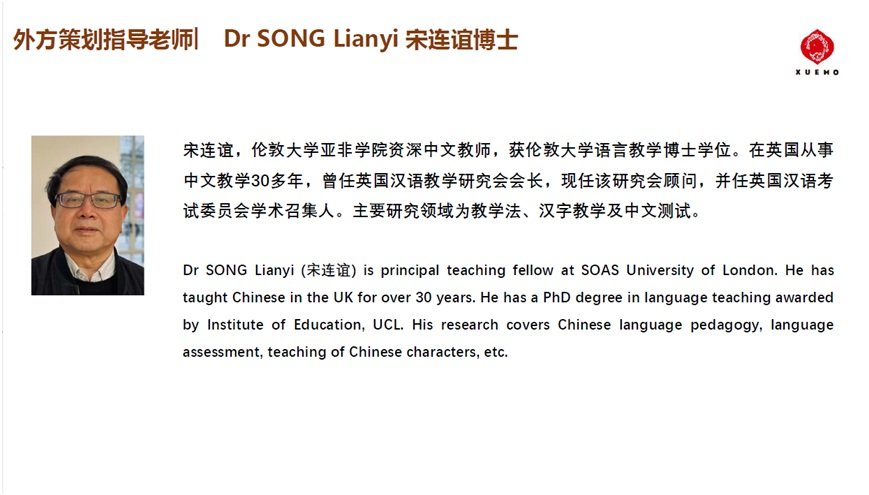
Mirzania)博士作为特别来宾。伦敦大学亚非学院(SOAS)的学者宋联谊博士为本次活动提供了深厚的指导。
This dialogue
aimed to explore how core humanistic values—such as loyal counsel, compassion,
and gratitude—are expressed and understood in different cultural contexts
through the close study of literary texts, thereby enhancing participants’
cross-cultural communication and textual analysis skills.
The event was
hosted by senior editor Blanche Wu (Wu Xia) and featured special guests
Professor Xiaoyan Wu from the University of Toronto and Dr. Elham Mirzania from
Toronto Metropolitan University. Dr. Lianyi Song from the School of Oriental
and African Studies (SOAS), University of London, provided valuable
guidance for the event from the very beginning.
活动聚焦文学文本,展开四重深度对话
The Event
Focused on Literary Texts and Unfolded Four Layers of In-Depth Dialogue
活动围绕《娑萨朗》中的一段核心选文展开,选段英文由知名汉学家莫冉教授采用了精心设计的四个研讨环节:
The event
centered on key excerpts from Suosalang and was structured around four
carefully designed discussion sessions. The English of the excerpts was
translated byProf. Dr. Riccardo Moratto:
1.文本初读与直觉理解:参与者首先分享了各自最受触动或引发思考的句子。中方参与者从中文的韵律与情感意境出发,阐释了“老人的慈爱像和煦的风”等句子的自然与感人之处;而西方参与者则对比了英文译本,探讨了“忠言”“感恩”等概念在英语表达中的微妙差异,并就此提出了“为何‘逆耳忠言’在中文里是正面表述”等深刻问题。
Textual
Understanding and Personal Connection:
In this session,
participants shared personal experiences in response to the question, “What
kind of advice has the greatest impact on you?” The discussion extended from
the literary text to everyday life, revealing the diversity in how advice is
received and care is expressed across different cultural backgrounds.
2.文本理解与个人关联:在本环节,与会者就“怎样的忠告最能对你产生影响”这一议题分享了个人经历。对话从文本延伸至生活,揭示了不同文化背景下接受建议与表达关怀方式的多样性。
Textual
Understanding and Personal Connection:
In this session,
participants shared personal experiences in response to the question, “What
kind of advice has the greatest impact on you?” The discussion extended from
the literary text to everyday life, revealing the diversity in how advice is
received and care is expressed across different cultural backgrounds.
3.隐喻分析与文化比较:主持人引导大家深入分析了文本中的“风”、“帆船”、“地图”、“陷阱”等一系列生动隐喻。中方参与者结合自身经验分享了类似的文化意象;西方参与者则对比了英语文学与日常表达中的类似手法。针对“无论师友以何种方式给予建议,都应感恩”这一观点,双方从东方注重动机与关系、西方侧重结果与效率的文化差异角度进行了热烈讨论,深化了彼此的文化认知。
Metaphor Analysis
and Cultural Comparison:
The moderator
guided participants in a close analysis of a series of vivid metaphors in the
text, including “the wind,” “a sailing boat,” “a map,” and “a trap.” Chinese
participants drew on their own cultural background to share similar symbolic
imagery, while Western participants compared these metaphors with examples from
English literature and everyday expressions. The discussion became particularly
lively around the idea that “no matter how teachers or friends offer advice, one
should respond with gratitude.” Participants explored this theme through
cultural differences—contrasting the Eastern emphasis on intention and
relationships with the Western tendency to focus more on outcomes and
effectiveness—thereby deepening mutual cultural understanding.
4.总结与反思:在活动的最后,所有学生参与者依次分享了收获。大家普遍认为,这次活动不仅是一次文学精读,更是一座跨文化理解的桥梁。通过逐字逐句的对照与讨论,参与者对自身文化预设有了更多反思,也对“另一种语言如何塑造思维与情感”有了切身体会。
Summary and
Reflection:
At the
conclusion of the event, all student participants shared their reflections in turn.
Most agreed that the session was not only a close reading of a literary text,
but also a bridge for cross-cultural understanding. Through careful,
line-by-line comparison and discussion, participants gained new insights into
their own cultural assumptions and experienced firsthand how another language
can shape ways of thinking and feeling.
雪漠分享创作初心,寄语文学沟通世界
Xue Mo Shares
His Creative Inspiration and Advocates Literature as a Means of Global
Communication
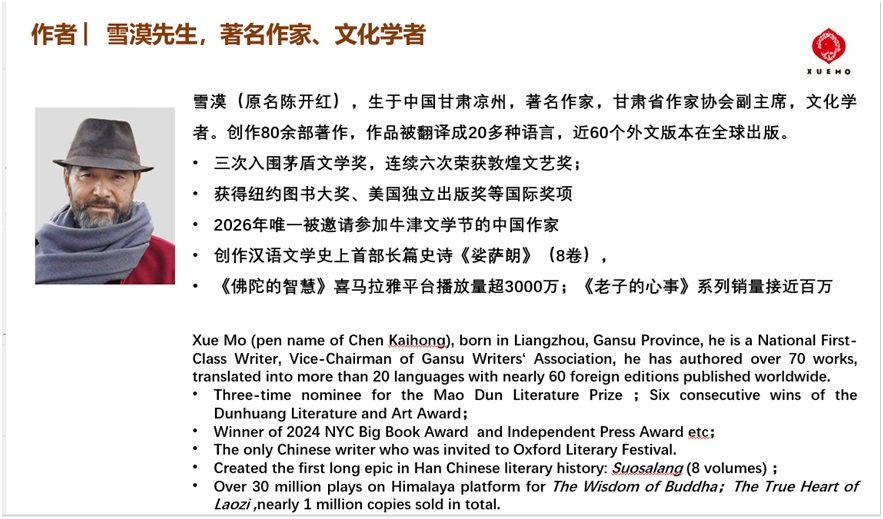
在活动的开场与总结环节,作家雪漠亲自介绍了《娑萨朗》的创作背景,并聆听了全程讨论。他在总结发言中强调,文学是人类共通的心灵语言,能够超越地域与文化的隔阂。《娑萨朗》作为一部描绘人类精神追寻的史诗,其内核正是对善、智慧与超越的普遍追求。他希望通过这样的文本研习,能让不同文化背景的年轻人互相倾听,在对话中发现彼此的共同人性,并以文学为媒,增进世界的相互理解与尊重。
In the opening
and closing segments of the event, the writer Xue Mo personally introduced the
creative background of Suosalang and followed the discussion throughout. In his
concluding remarks, he emphasized that literature is a universal language of
the human spirit, capable of transcending geographical and cultural boundaries.
Suosalang, as an epic depicting humanity’s spiritual quest, centers on the
universal pursuit of goodness, wisdom, and transcendence. He expressed his hope
that through such close textual study, young people from diverse cultural
backgrounds could listen to one another, discover shared aspects of human
nature through dialogue, and use literature as a medium to enhance mutual
understanding and respect across the world.
本次活动是“《娑萨朗》对话系列”的良好开端,成功搭建了一个高水平的国际青年学术对话平台。它表明,深入的文学文本细读是进行有效、深度跨文化交流的绝佳途径。主办方表示,未来将继续举办系列对话,让来自世界各地的声音,通过文学这座桥梁,持续共鸣。
This event marked
a successful beginning of the “Suosalang Dialogue Series,” establishing a
high-level international platform for academic dialogue among young scholars.
It demonstrated that in-depth literary analysis is an excellent avenue for
meaningful and profound cross-cultural exchange. The organizers stated that
they plan to continue the dialogue series in the future, enabling voices from
around the world to resonate continuously through the bridge of literature.




 手机版
手机版  雪漠推荐
雪漠推荐
 我心中最精彩的青春——《一个人的西部·致